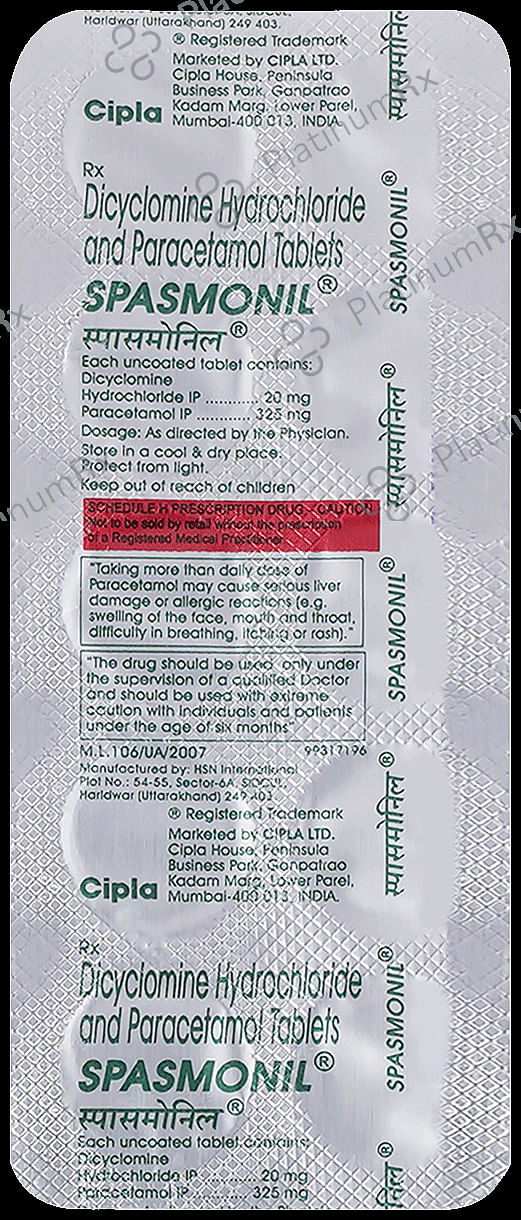
Sungspas 20mg/325mg Tablet

Sungspas 20mg/325mg Tablet is a combination medicine used in the treatment of abdominal pain. It works effectively to reduce abdominal pain and cramps by relaxing the muscles of the stomach and gut. It also blocks certain chemical messengers that cause pain and fever. Sungspas 20mg/325mg Tablet is taken with or without food in a dose and duration as advised by the doctor. It is better to take it with food to avoid stomach upset. The dose you are given will depend on your condition and how you respond to the medicine. You should keep taking this medicine for as long as your doctor recommends. If you stop treatment too early your symptoms may come back and your condition may worsen. Let your healthcare team know about all other medications you are taking as some may affect, or be affected by this medicine. The most common side effects are nausea, dryness in the mouth, blurred vision, weakness, and nervousness. Most of these are temporary and usually resolve with time. Contact your doctor straight away if you are at all concerned about any of these side effects. It may also cause sleepiness, so do not drive or do anything that requires mental focus until you know how this medicine affects you. Avoid drinking alcohol while taking this medicine as it can worsen your sleepiness. Before taking it, you should tell your doctor if you have any kidney or liver diseases so that your doctor can prescribe a suitable dose for you. You should also tell your doctor if you are breastfeeding.
Delivery by
...

WHO GMP Certified
Long Expiry (>8 Months)
15 Days Easy Returns
Medicine Comparison

Genuine Medicine
Pay On Delivery
Secure Payment

LegitScript Certified Online Pharmacy


More About Sungspas 20mg/325mg Tablet
Quick Summary
Sungspas 20mg/325mg Tablet is a combination medicine used in the treatment of abdominal pain. It works effectively to reduce abdominal pain and cramps by relaxing the muscles of the stomach and gut. It also blocks certain chemical messengers that cause pain and fever. Sungspas 20mg/325mg Tablet is taken with or without food in a dose and duration as advised by the doctor. It is better to take it with food to avoid stomach upset. The dose you are given will depend on your condition and how you respond to the medicine. You should keep taking this medicine for as long as your doctor recommends. If you stop treatment too early your symptoms may come back and your condition may worsen. Let your healthcare team know about all other medications you are taking as some may affect, or be affected by this medicine. The most common side effects are nausea, dryness in the mouth, blurred vision, weakness, and nervousness. Most of these are temporary and usually resolve with time. Contact your doctor straight away if you are at all concerned about any of these side effects. It may also cause sleepiness, so do not drive or do anything that requires mental focus until you know how this medicine affects you. Avoid drinking alcohol while taking this medicine as it can worsen your sleepiness. Before taking it, you should tell your doctor if you have any kidney or liver diseases so that your doctor can prescribe a suitable dose for you. You should also tell your doctor if you are breastfeeding.
Benefits of Sungspas 20mg/325mg Tablet
Treatment of Abdominal pain
In Treatment of Abdominal pain Sungspas 20mg/325mg Tablet effectively relieves sudden muscle spasms or contractions in the stomach and intestine (gut), thereby relaxing the muscles and improving the movement of food. It also blocks chemical messengers in the brain that are responsible for pain sensation. This helps to treat abdominal pain (or stomach pain) as well as cramps, bloating, and discomfort. Take Sungspas 20mg/325mg Tablet as prescribed to get maximum benefit. Eventually, it will help you to go about your daily activities more easily and have a more active and better quality of life.
Side Effects of Sungspas 20mg/325mg Tablet
Most side effects do not require any medical attention and disappear as your body adjusts to the medicine. Consult your doctor if they persist or if you're worried about them. ['Dryness in mouth, Blurred vision, Sleepiness, Weakness, Nervousness']
Directions for Use
Take this medicine in the dose and duration as advised by your doctor. Swallow it as a whole. Do not chew, crush or break it. Sungspas 20mg/325mg Tablet may be taken with or without food, but it is better to take it at a fixed time.
How it works
Sungspas 20mg/325mg Tablet is a combination of two medicines: dicyclomine and paracetamol, which relieves abdominal pain and cramps. Dicyclomine is an anti-cholinergic which relaxes the muscles in the stomach and gut (intestine). It stops sudden muscle contractions (spasms), thereby relieving cramps, pain, bloating, and discomfort. Paracetamol is an analgesic (pain reliever) which works by blocking the release of certain chemical messengers that cause pain.

Alcohol
UNSAFE - It is unsafe to consume alcohol with Sungspas 20mg/325mg Tablet.

Pregnancy
SAFE IF PRESCRIBED - Sungspas 20mg/325mg Tablet is generally considered safe to use during pregnancy. Animal studies have shown low or no adverse effects to the developing baby; however, there are limited human studies.

Breast feeding
CONSULT YOUR DOCTOR - Sungspas 20mg/325mg Tablet is probably unsafe to use during breastfeeding. Limited human data suggests that the drug may pass into the breastmilk and harm the baby.

Driving
CONSULT YOUR DOCTOR - It is not known whether Sungspas 20mg/325mg Tablet alters the ability to drive. Do not drive if you experience any symptoms that affect your ability to concentrate and react.

Kidney
CAUTION - Sungspas 20mg/325mg Tablet should be used with caution in patients with kidney disease. Dose adjustment of Sungspas 20mg/325mg Tablet may be needed. Please consult your doctor.

Liver
CAUTION - Sungspas 20mg/325mg Tablet should be used with caution in patients with liver disease. Dose adjustment of Sungspas 20mg/325mg Tablet may be needed. Please consult your doctor. However, the use of Sungspas 20mg/325mg Tablet is not recommended in patients with severe liver disease and active liver disease.
What If You Forget to take Sungspas 20mg/325mg Tablet?
If you miss a dose of Sungspas 20mg/325mg Tablet, take it as soon as possible. However, if it is almost time for your next dose, skip the missed dose and go back to your regular schedule. Do not double the dose.
Storage Advice
Store below 30°C
Manufacturer Address
Kuleep Nagar , Ambala Cantt (Haryana), 133004
Disclaimer
PlatinumRx is committed to providing reliable and accurate information to support informed customer decisions. However, all information made available on the Platform, including product descriptions, comparisons, and other content, is provided solely for general informational purposes. Such information is not intended to diagnose, prevent, treat, or cure any medical condition, nor should it be relied upon as a substitute for professional medical advice, diagnosis, or treatment.

Customers also bought
More Medicines By Manufacturer
More Medicines With Salt
Top Selling Medicines
Top Selling Devices