


Caffeine + Ergotamine + Paracetamol (Acetaminophen) + Prochlorperazine
Uses
Caffeine, Ergotamine, Paracetamol, and Prochlorperazine are used in the treatment and prevention of migraines.
How it Works
Caffeine, Ergotamine, Paracetamol, and Prochlorperazine is a combination of four medications that work together to treat migraines.
Side Effects
Common side effects of caffeine, ergotamine, paracetamol, and prochlorperazine include dryness of the mouth, constipation, sedation, orthostatic hypotension (sudden lowering of blood pressure upon standing), drowsiness, urinary retention, increased heart rate, and muscle pain.
Expert Advice
- Caffeine + Ergotamine + Paracetamol + Prochlorperazine aids in the treatment and prevention of migraine headaches.
- Do not use it to treat an acute migraine attack.
- Some tips that may help avoid a migraine attack include:
- Have your meals at the same time every day.
- Avoid bright lights and extreme temperatures.
- Avoid loud music and noisy places.
- Avoid chocolates, cheese, processed foods, alcohol, and smoking.
- Get sufficient sleep and manage stress.
- It should be taken at night before going to bed.
- It may cause sleepiness; do not drive or engage in activities that require mental focus until you know how Caffeine + Ergotamine + Paracetamol + Prochlorperazine affects you.
- Do not take it with any other medication containing paracetamol (such as drugs for pain/fever or cough-and-cold) without consulting your doctor first.
- Do not stop taking the medication suddenly, as it can lead to worsening of headaches.
Top Selling Medicines
Top Health Products
Top Selling Devices
Dr. Morepen Gluco One BG-03 Test StripsAccu-Chek Instant Test StripsAccu-Chek Active Test StripsDr. Morepen BP-14 Blood Pressure MonitorAccu-Chek Active Test Strips 100sOneTouch Select Plus Test StripsDr. Morepen BG-03 GlucometerOneTouch Verio Test StripsAccu-Chek Instant S GlucometerAccu-Chek Active Test Strips 25sView More
Related Medications

Salt Composition
Caffeine 100mg + Ergotamine 1mg + Paracetamol (Acetaminophen) 250mg + Prochlorperazine 2.5mg
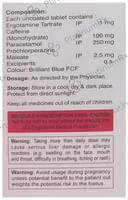
Migrafen Tablet
Leeford Healthcare Ltd.
Strip of 10 tablets
MRP ₹120