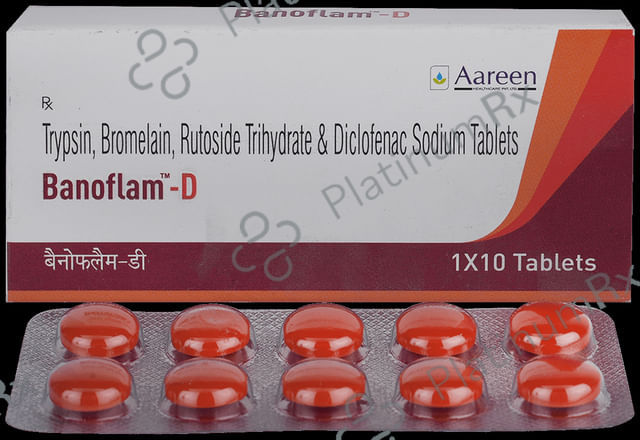
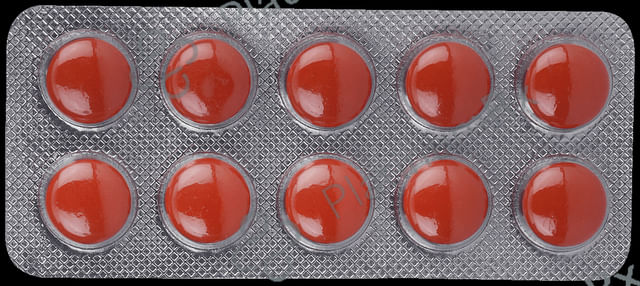
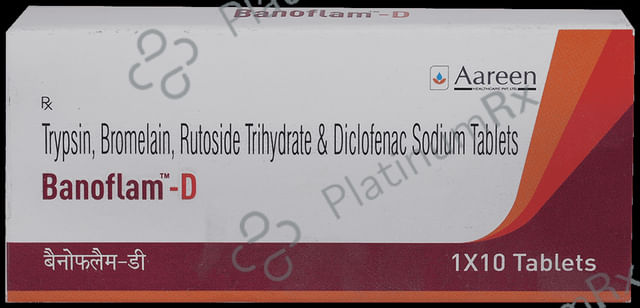
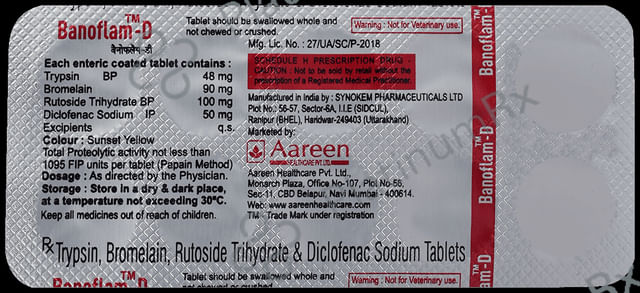
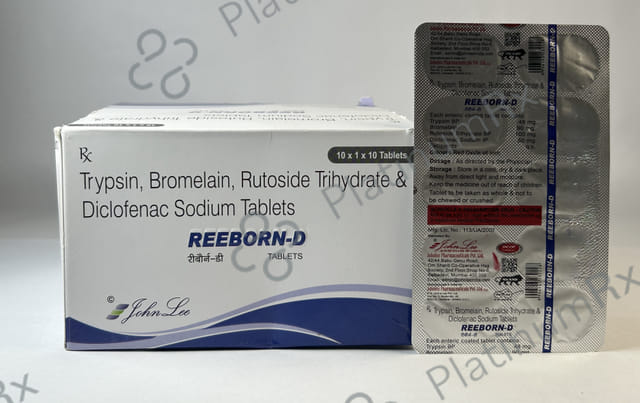
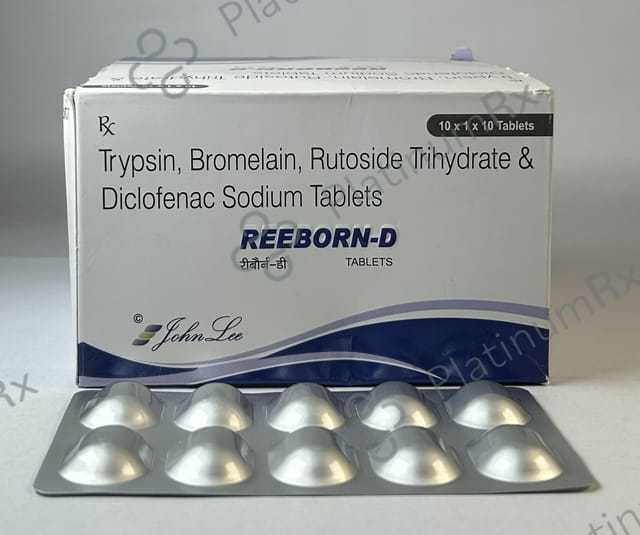
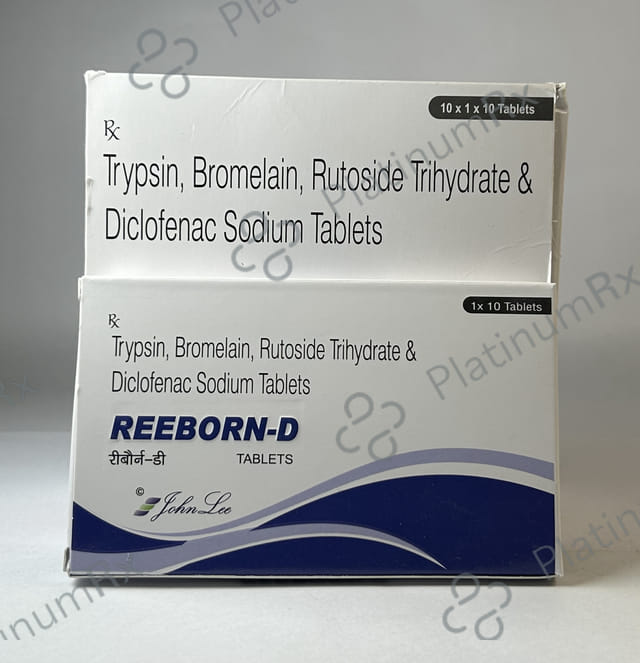
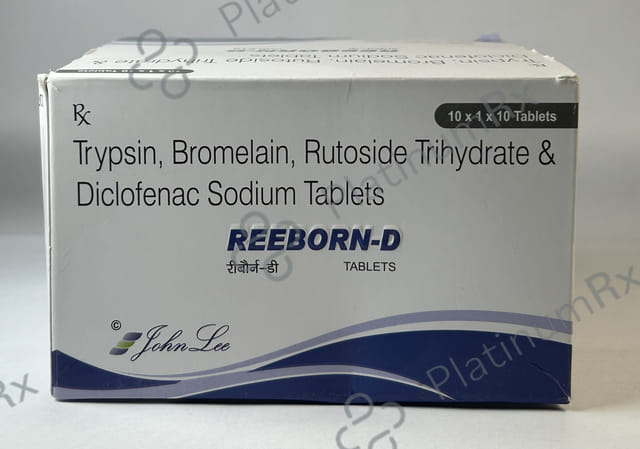
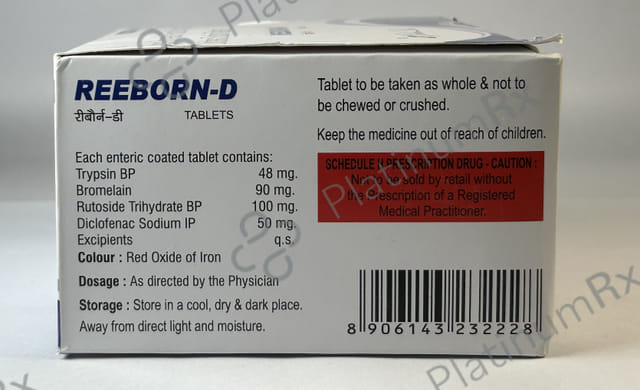
Banoflam D Tablet 10s

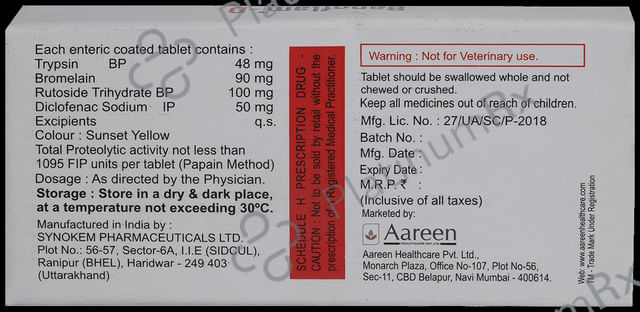
Banoflam D Tablet 10s is a fixed-dose combination of four agents, Bromelain, Diclofenac, Rutoside (Rutin), and Trypsin Chymotrypsin, formulated to manage pain, swelling, and inflammation associated with musculoskeletal injuries, post-operative states, and inflammatory conditions. Diclofenac is a non-steroidal anti-inflammatory drug (NSAID) that inhibits prostaglandin synthesis for analgesia and inflammation relief. Bromelain and Trypsin Chymotrypsin are proteolytic enzymes that reduce oedema and accelerate tissue repair, while Rutoside is a bioflavonoid that stabilises capillary walls, reduces vascular permeability, and enhances the anti-inflammatory effect of the combination. Together, they provide multi-modal relief from acute and chronic inflammatory pain. Always use Banoflam D Tablet 10s exactly as directed by your doctor.
Last updated on: 21-05-2026
 Save 71%with an exact substitute
See affordable match
Johnlee Pharmaceuticals Pvt. Ltd.
Delivery by
...

WHO GMP Certified
Long Expiry (>8 Months)
15 Days Easy Returns
Medicine Comparison

Genuine Medicine
Pay On Delivery
Secure Payment
View content in
 English
Quick Summary
Banoflam D Tablet 10s is a fixed-dose combination of four agents, Bromelain, Diclofenac, Rutoside (Rutin), and Trypsin Chymotrypsin, formulated to manage pain, swelling, and inflammation associated with musculoskeletal injuries, post-operative states, and inflammatory conditions. Diclofenac is a non-steroidal anti-inflammatory drug (NSAID) that inhibits prostaglandin synthesis for analgesia and inflammation relief. Bromelain and Trypsin Chymotrypsin are proteolytic enzymes that reduce oedema and accelerate tissue repair, while Rutoside is a bioflavonoid that stabilises capillary walls, reduces vascular permeability, and enhances the anti-inflammatory effect of the combination. Together, they provide multi-modal relief from acute and chronic inflammatory pain. Always use Banoflam D Tablet 10s exactly as directed by your doctor.
Detailed Description
Banoflam D Tablet 10s brings together four pharmacologically complementary agents to provide superior anti-inflammatory, analgesic, and tissue-healing activity. Diclofenac Sodium is a potent NSAID belonging to the phenylacetic acid class. It inhibits both cyclo-oxygenase-1 (COX-1) and cyclo-oxygenase-2 (COX-2) enzymes, blocking the conversion of arachidonic acid into prostaglandins and thromboxanes. This results in reduced pain sensitisation, decreased vascular permeability, and suppression of the inflammatory cascade at the site of tissue injury.
Bromelain is a mixture of cysteine proteases derived from the stem and fruit of the pineapple plant (Ananas comosus). It exerts anti-inflammatory and anti-oedematous effects by degrading fibrin deposits at injury sites, reducing bradykinin levels, modulating prostaglandin synthesis, and facilitating the reabsorption of oedema fluid from interstitial spaces. Trypsin and Chymotrypsin are serine proteases of pancreatic origin. In combination, they cleave damaged tissue proteins and fibrin, reduce viscosity of inflammatory exudates, enhance microcirculation at the injury site, and accelerate the natural resolution of post-traumatic and post-operative swelling.
Rutoside (Rutin) is a naturally occurring flavonoid glycoside found in many plants. It inhibits platelet aggregation, reduces capillary fragility and permeability, scavenges free radicals, and augments the anti-inflammatory actions of the proteolytic enzymes. By strengthening vascular walls and reducing fluid leakage into surrounding tissues, Rutoside helps control localised swelling and bruising. The synergistic interaction of these four agents addresses pain and inflammation through multiple pathways, making Banoflam D Tablet 10s effective in conditions where a single-agent approach is insufficient.
Uses of Banoflam D Tablet 10s
The uses of Banoflam D Tablet 10s are as follows:
Post-Traumatic Oedema and Swelling:
Reduction of pain, bruising, and soft tissue swelling following sprains, strains, contusions, and other musculoskeletal injuries.
Post-Operative Inflammation:
Management of pain and tissue oedema in the post-surgical recovery period to accelerate wound healing and restore normal tissue function.
Osteoarthritis and Rheumatoid Arthritis:
Relief of joint pain, stiffness, and inflammation in degenerative and autoimmune arthritis, where multi-modal anti-inflammatory therapy offers advantage over a single NSAID.
Dental and Oral Surgical Procedures:
Control of pain and oedema following tooth extraction, periodontal surgery, and other oral procedures where enzymatic debridement complements NSAID analgesia.
Sinusitis and Upper Respiratory Inflammation:
Adjunctive therapy in sinusitis to reduce mucosal oedema, thin secretions, and facilitate drainage through the proteolytic and anti-inflammatory actions of the enzyme components.
Thrombophlebitis and Venous Inflammation:
Management of inflammation and pain associated with superficial thrombophlebitis, where Rutoside’s capillary-stabilising effect and proteolytic fibrinolysis provide meaningful adjunctive benefit.
Benefits of Banoflam D Tablet 10s
Here are the benefits of Banoflam D Tablet 10s:
- Multi-Modal Anti-Inflammatory Action: The combination targets inflammation through four distinct pathways, COX inhibition by Diclofenac, proteolytic debridement by Bromelain and Trypsin Chymotrypsin, and capillary stabilisation by Rutoside, delivering broader and more effective relief than any single agent alone.
- Faster Resolution of Oedema and Bruising: Proteolytic enzymes actively break down fibrin and inflammatory exudates, accelerating the natural resolution of post-traumatic or post-operative swelling and haematoma more rapidly than anti-inflammatory drugs alone.
- Effective Analgesia: Diclofenac provides potent and reliable pain relief through prostaglandin suppression, making the combination suitable for moderately severe inflammatory pain arising from musculoskeletal, surgical, or dental causes.
- Vascular and Capillary Protection: Rutoside reinforces capillary walls, reduces abnormal fluid leakage into surrounding tissues, and helps control localised oedema and bruising, complementing the anti-inflammatory mechanisms of the other agents.
- Accelerated Recovery and Tissue Healing: By clearing inflammatory debris, reducing oedema, improving microcirculation, and controlling pain, the combination supports earlier return to normal function following injury or surgery, shortening overall recovery time.
Side Effects of Banoflam D Tablet 10s
Like all medicines, Banoflam D Tablet 10s may cause side effects in some individuals, although many people tolerate it well. Most side effects relate to the NSAID component and are more likely with higher doses or prolonged use.
Common Side Effects:
- Gastrointestinal Upset: Nausea, indigestion, epigastric discomfort, and bloating are the most frequently reported effects of Diclofenac; taking the tablet with food or milk helps reduce gastric irritation.
- Headache and Dizziness: May occur in some individuals, particularly early in treatment; usually mild and transient.
- Loose Stools or Diarrhoea: The proteolytic enzyme components may increase gut motility in some individuals; dose reduction or taking the tablet with meals usually resolves this.
Uncommon Side Effects:
- Elevated Liver Enzymes: Diclofenac is associated with transient elevation of liver enzymes (AST, ALT) with prolonged use; monitoring is advised in patients with hepatic risk factors.
- Skin Rash or Urticaria: Hypersensitivity reactions including rash, itching, or hives may occur; discontinue and seek medical advice if these develop.
- Fluid Retention and Mild Oedema: NSAIDs can cause sodium and water retention; patients with cardiac or renal conditions should be monitored for ankle swelling or weight gain.
Serious Side Effects (Require Immediate Medical Attention):
- Gastrointestinal Bleeding or Ulceration: NSAIDs can cause peptic ulceration or GI haemorrhage; warning signs include black or tarry stools, vomiting blood, or severe abdominal pain.
- Severe Allergic Reaction: Anaphylaxis, angioedema, or bronchospasm (especially in aspirin-sensitive individuals) may occur.
- Cardiovascular Events: Prolonged NSAID use, particularly at higher doses, is associated with increased risk of myocardial infarction and stroke; use the lowest effective dose for the shortest duration, especially in patients with cardiovascular risk factors.
Always consult your doctor if you notice any unusual symptoms while taking Banoflam D Tablet 10s.
Directions for Use
To ensure optimal therapeutic benefit and minimise the risk of side effects, Banoflam D Tablet 10s should be taken exactly as advised by your doctor.
- Take Banoflam D Tablet 10s exactly as prescribed. Do not self-adjust the dose or frequency without medical advice.
- Swallow the tablet whole with a full glass of water. Do not crush, break, or chew enteric-coated or sustained-release formulations.
- Take Diclofenac-containing tablets with or immediately after food to reduce the risk of gastric irritation and gastrointestinal side effects.
- The enzyme components (Bromelain and Trypsin Chymotrypsin) are best absorbed on an empty stomach when used as systemic anti-inflammatories; follow your doctor’s specific instructions on timing relative to meals.
- Do not take more than the recommended daily dose; exceeding the prescribed amount increases the risk of gastrointestinal, renal, and cardiovascular adverse effects.
- Avoid alcohol while taking this combination, as it increases the risk of gastric bleeding and hepatic adverse effects associated with Diclofenac.
- Use for the shortest duration necessary to control symptoms. Do not use long-term without periodic reassessment by your doctor.
How it works
Banoflam D Tablet 10s works through four complementary and synergistic mechanisms acting on the inflammatory process.
Diclofenac inhibits COX-1 and COX-2 enzymes, blocking arachidonic acid conversion to prostaglandins and thromboxanes. Reduced prostaglandin levels lower pain receptor sensitisation at peripheral nerve endings, decrease vascular permeability, and suppress signs of inflammation including redness, heat, swelling, and pain. Diclofenac also inhibits leukotriene synthesis and phospholipase A2 activity at higher concentrations, further broadening its anti-inflammatory profile.
Bromelain, a pineapple-derived cysteine protease, degrades fibrin clots and inflammatory exudate proteins, reduces bradykinin concentrations in inflamed tissue, and modulates prostaglandin synthesis. Trypsin and Chymotrypsin are pancreatic serine proteases that cleave denatured proteins and fibrin in the inflammatory zone, reduce exudate viscosity, improve lymphatic drainage, and enhance resolution of oedema. Rutoside acts at the capillary level, stabilising endothelial cell junctions through inhibition of phosphodiesterase and modulation of intracellular cAMP levels, reducing pathological fluid and protein leakage into interstitial spaces and scavenging pro-inflammatory free radicals.
Safety Advice for Banoflam D Tablet 10s

Alcohol
Caution
Avoid alcohol while taking this combination. Alcohol significantly increases the risk of gastrointestinal bleeding and hepatic toxicity associated with Diclofenac.

Pregnancy
Caution
Diclofenac is contraindicated in the third trimester of pregnancy due to risk of premature closure of the ductus arteriosus. Avoid use throughout pregnancy unless specifically directed by a doctor.

Breastfeeding
Caution
CONSULT YOUR DOCTOR: Diclofenac passes into breast milk in small amounts. Use with caution and only under medical supervision during breastfeeding.

Driving
Safe
Banoflam D Tablet 10s does not typically impair alertness. However, dizziness may occasionally occur; avoid driving if affected.

Liver
Caution
Diclofenac can impair renal function and cause hepatotoxicity. Use with caution in patients with pre-existing kidney or liver disease; dose reduction or closer monitoring may be necessary.
Quick Tips for Banoflam D Tablet 10s
A few practical measures can significantly improve treatment outcomes and minimise the risk of side effects.
- Always take the Diclofenac-containing tablet with food to protect the stomach lining and reduce the risk of gastrointestinal side effects.
- Do not combine with other NSAIDs such as ibuprofen, aspirin, or naproxen without your doctor’s approval, as this multiplies gastrointestinal and cardiovascular risk without additional benefit.
- If you have a history of peptic ulcers or gastric bleeding, inform your doctor before starting this combination; a gastroprotective agent such as a proton pump inhibitor may be co-prescribed.
- Use the lowest effective dose for the shortest duration needed; do not self-extend the course beyond the prescribed period.
- Patients with aspirin-sensitive asthma (aspirin-exacerbated respiratory disease) should avoid Diclofenac-containing preparations as they may trigger bronchoconstriction.
- Report any signs of gastrointestinal bleeding, such as black stools, vomiting of blood, or unexplained abdominal pain, to your doctor immediately and stop the medication.
Storage Advice
Proper storage helps maintain the effectiveness and safety of Banoflam D Tablet 10s throughout its shelf life.
- Store at room temperature below 25°C, away from direct sunlight, heat, and moisture.
- Keep tablets in the original packaging to protect the enzyme components from humidity, which can degrade their biological activity.
- Do not refrigerate or freeze; enzyme activity can be diminished by very low temperatures.
- Keep out of reach of children.
- Do not use after the expiry date printed on the label or packaging.
Drug-Food Interaction
Banoflam D Tablet 10s has important food and beverage interactions that patients should be aware of:
- Avoid alcohol entirely during treatment, as it markedly amplifies the gastric mucosal damage and hepatic stress caused by Diclofenac, increasing bleeding risk significantly.
- Taking the tablet with a full meal reduces gastric irritation from Diclofenac without significantly reducing its absorption or efficacy.
- Large quantities of pineapple juice may mildly augment the proteolytic activity of Bromelain, though this is unlikely to be clinically significant at standard doses.
Interactions with Other Drugs
Banoflam D Tablet 10s may interact with:
- Anticoagulants and Antiplatelets: Diclofenac inhibits platelet aggregation and the proteolytic enzymes may enhance fibrinolysis; combined use significantly increases bleeding risk, particularly gastrointestinal haemorrhage.
- Other NSAIDs: Concurrent use of multiple NSAIDs dramatically increases the risk of gastrointestinal ulceration, bleeding, and renal impairment without providing additional analgesic benefit.
- Antihypertensive Drugs: NSAIDs can blunt the blood-pressure-lowering effect of antihypertensives and increase the risk of acute kidney injury when combined with renin-angiotensin system inhibitors or diuretics.
- Lithium: Diclofenac reduces renal lithium clearance, leading to elevated plasma lithium levels and risk of toxicity; lithium levels should be monitored if concurrent use is necessary.
- Corticosteroids: Combining systemic corticosteroids with Diclofenac substantially increases the risk of peptic ulceration and gastrointestinal haemorrhage; co-prescription requires gastroprotective cover and close monitoring.
Drug-Disease Interactions
Banoflam D Tablet 10s should be used carefully in:
- Peptic Ulcer Disease or Gastritis: Diclofenac inhibits COX-1-mediated gastroprotective prostaglandins, worsening existing ulcers or precipitating new ones; a gastroprotective agent should be co-prescribed.
- Chronic Kidney Disease: NSAIDs reduce renal prostaglandin synthesis, leading to decreased glomerular filtration and risk of acute kidney injury; avoid or use with extreme caution in pre-existing renal impairment.
- Aspirin-Sensitive Asthma: Patients with aspirin-exacerbated respiratory disease may develop bronchoconstriction with any NSAID; avoid Diclofenac in this population.
- Heart Failure or Hypertension: NSAIDs cause fluid retention and can worsen both heart failure and blood pressure control; use with caution and monitor patients closely.
- Coagulation Disorders or Bleeding Tendencies: Both Diclofenac and the proteolytic enzymes may impair haemostasis; avoid in patients with active bleeding disorders or those undergoing anticoagulant therapy without specialist advice.
Daily Dose
The dose of Banoflam D Tablet 10s depends on the severity of the condition, the patient’s age, renal and hepatic function, and clinical response. Typically, one tablet is administered two to three times daily with or after meals, for a course of five to seven days for acute conditions, or as directed by the prescribing physician for chronic inflammatory conditions. The lowest effective dose should always be used for the shortest necessary duration. Use in children and elderly patients requires careful dose adjustment under medical supervision. Always follow medical instructions carefully and do not exceed the recommended daily dose.
What If You Forget to take Banoflam D Tablet 10s?
If you miss a dose of Banoflam D Tablet 10s, take it as soon as you remember, unless it is almost time for your next scheduled dose. In that case, skip the missed dose and continue with your regular dosing schedule. Never double the dose to compensate for a missed one.
FAQ
Fact Box
Therapeutic Class
Analgesic / Anti-inflammatory / Enzyme Therapy
Action Class
COX Inhibitor + Proteolytic Enzymes + Bioflavonoid / Capillary Stabiliser
Chemical Class
NSAID + Cysteine Protease + Serine Proteases + Bioflavonoid Glycoside
Habit Forming
No
Disclaimer
PlatinumRx is committed to providing reliable and accurate information to support informed customer decisions. However, all information made available on the Platform, including product descriptions, comparisons, and other content, is provided solely for general informational purposes. Such information is not intended to diagnose, prevent, treat, or cure any medical condition, nor should it be relied upon as a substitute for professional medical advice, diagnosis, or treatment.
Editorial Policy
Customers also bought
Health Articles






More Medicines By Manufacturer
More Medicines With Salt
Top Selling Medicines
Top Selling Devices